Why Is My Dog Vomiting? Causes and When to See the Vet (Vet Verified)

Watching your dog throw up is unsettling, but vomiting is one of the most common reasons dogs see a vet, and it isn’t always serious. Wondering “Why is my dog vomiting”? Knowing what typically causes it and which details matter, helps you tell a passing stomach upset from something that needs prompt attention.
Dog Vomiting – The Short Answer
Dog vomiting is usually caused by dietary indiscretion, mild gastrointestinal upset, or a passing infection, and most isolated episodes resolve within a day. Vomiting that repeats, contains blood, occurs with diarrhea, or comes with lethargy or a behavior change warrants veterinary evaluation rather than a wait-and-see approach.
Key Takeaways
- Most single episodes of vomiting resolve without treatment
- Yellow bile often means an empty stomach, but frequent bile vomiting can signal a motility issue
- Vomiting with diarrhea raises the risk of dehydration and often means more significant gastrointestinal (GI) involvement
- Blood, repeated vomiting, lethargy, or abdominal pain mean it’s time to call the vet
- Tracking broader patterns, not just the vomiting itself, gives you and your vet more useful information
What Causes Dog Vomiting?

Vomiting is a symptom, not a diagnosis. Common causes include:
- Dietary indiscretion: getting into table scraps, garbage, spoiled food, or foul-tasting things like certain insects is one of the most frequent triggers
- Food intolerance or allergy: a diet change or an intolerance or allergy to specific ingredients can irritate the GI tract
- Infections and parasites: bacterial or viral infections and intestinal parasites are well-documented causes
- Toxins: household chemicals, certain medications, and toxic plants can trigger vomiting as the body clears the substance
- Foreign bodies: dogs that swallow toys or other items can develop an obstruction, and X-rays are appropriate for most cases because they can identify a life-threatening ingested object
- Underlying disease: a wide range of metabolic, endocrine, hepatobiliary, and renal diseases can present with vomiting, so persistent or unexplained cases deserve a full workup
Because so many problems look alike at first, the pattern of vomiting matters more than any single episode.
What Does It Mean When a Dog Vomits Yellow Bile?
Yellow bile is a digestive fluid from the liver and gallbladder. When a dog vomits on an empty stomach, there’s no food left to bring up, so the vomitus is often coated with yellow bile or digested food material rather than fresh food, which is why bile vomiting often happens first thing in the morning, before the first meal of the day.
Occasional bile vomiting on an empty stomach usually isn’t concerning. But timing matters: vomiting undigested or partially digested food more than eight to ten hours after eating often points toward a gastric motility disorder rather than a simple empty-stomach reflex, and that pattern is worth describing to your vet in detail. Frequent early-morning bilious vomiting may benefit from smaller, more frequent meals or a veterinary check to rule out a motility problem.
What If Your Dog Is Vomiting and Has Diarrhea?
Vomiting and diarrhea together generally signal more significant GI involvement than either alone. Diarrhea is specifically listed among the signs that call for immediate veterinary care when it appears alongside vomiting, largely because the combination accelerates fluid and electrolyte losses, which can lead to dangerous changes in electrolyte balance and life-threatening dehydration, particularly in small breeds, puppies and senior dogs.
The combination also points toward the intestines being involved and not only the stomach, making infections, parasites, dietary intolerance and inflammatory bowel disease more likely. If both symptoms persist more than a few hours, or either is severe, have your vet assess your dog rather than waiting it out.
When Is Vomiting an Emergency?

Seek veterinary care promptly if your dog shows any of the following signs alongside vomiting:
- Fever, lethargy, loss of appetite or abdominal pain
- Vomit containing blood or matter resembling coffee grounds
- Vomiting lasting more than one to two days, even if your dog otherwise seems fine
- Suspected toxin ingestion or a swallowed object that could cause a blockage
- Vomiting with diarrhea, dehydration or a swollen or painful abdomen
- A noticeable change in energy, alertness or willingness to drink
Puppies and senior dogs decompensate faster, so a lower threshold for calling the vet makes sense in those age groups. A single episode in an otherwise normal active dog is less concerning than repeated vomiting or a dog who seems “off.”
What Should You Do If Your Dog Is Throwing Up?
For a dog that vomits once but is otherwise alert and acting normally, withholding food, but not water, for about 12 hours before offering plain white rice and boiled chicken for a day or two is a commonly recommended first step, since ongoing fluid loss is one of the bigger risks of vomiting.
From there, watch the trajectory rather than the single event:
- Note whether vomiting frequency is increasing
- Watch for a return to normal appetite and energy within 24 hours
- Track new symptoms like diarrhea, lethargy or reduced drinking
- Call your vet if vomiting continues, worsens or you’re unsure
Because dog throwing up can stem from so many causes, the most useful thing to do at home is observe the broader picture rather than self-diagnose.
How Maven Helps
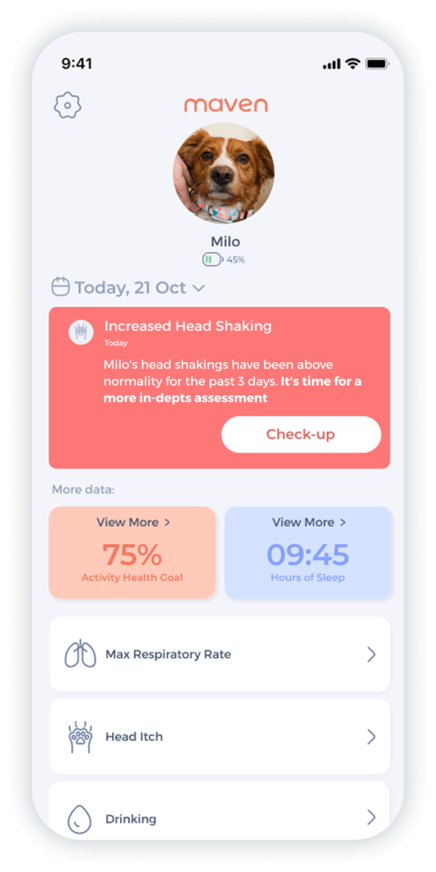
Maven doesn’t diagnose the cause of vomiting or directly measure vomiting episodes, but it helps put an episode into context. The pet health tracker builds a personalized baseline and flags meaningful deviations from it, which are often more useful than any single symptom alone.

Monitor heart rate, respiratory rate, activity & rest, drinking, itch behavior.
Maven’s dog health tracker monitors:
- Activity: via the dog activity tracker, to help notice lethargy or unusual restlessness
- Rest: showing whether your dog is sleeping more or experiencing disrupted sleep
- Heart rate trends: for added physiological context during illness
- Resting respiratory rate: via the dog respiratory rate tracker (see the normal respiratory rate in dogs for reference) that can be linked to discomfort or distress
- Water intake: via the dog drinking tracker, relevant when vomiting affects hydration
Maven sends alerts when these metrics deviate from baseline, helping you catch changes you might otherwise miss.
“An isolated episode of vomiting does not always mean something is seriously wrong, but repeated vomiting or a sudden change in your dog’s normal behavior deserves attention. Looking at the bigger pattern, including activity, rest, drinking, and other symptoms, can help you recognize when veterinary evaluation is needed.” – Joana Babo, DVM, Veterinarian at Maven Pet
The pet health app puts this information in one place, giving you and your vet objective data to work from.
FAQ (Vet-Reviewed)
Most often it’s dietary indiscretion, mild stomach upset or a minor infection. Less commonly it signals toxin exposure, a foreign body or an underlying illness. Persistent or unusual vomiting should be evaluated.
Yellow bile usually appears on an empty stomach. Occasional bile vomiting isn’t typically concerning, but frequent bile vomiting, especially in the morning, is worth mentioning to your vet.
The combination raises dehydration risk and often suggests more significant gastrointestinal involvement. If it persists beyond a few hours or looks severe, contact your vet.
A single and mild episode can often be monitored at home for 24 hours. Beyond that, or with other symptoms, call your vet.
When it’s repeated, contains blood, comes with diarrhea or lethargy, or your dog seems unwell overall. These patterns matter more than any one episode.
Conclusion
Dog vomiting is common and most isolated episodes aren’t cause for alarm. What matters more is the pattern – frequency, accompanying symptoms and whether your dog’s broader behavior has changed. Paying attention to those details, and tracking them consistently, helps you recognize when it’s a passing stomach upset versus when it’s time to call the vet.
Maven Pet focuses on improving the quality of life of our pets with technology, using artificial intelligence (AI) to enable proactive pet care. By accurately collecting and monitoring pet data 24/7 and flagging any irregularities, Maven Pet empowers pet parents and veterinarians to stay ahead of potential health issues, ensuring the well-being and longevity of our beloved companions.